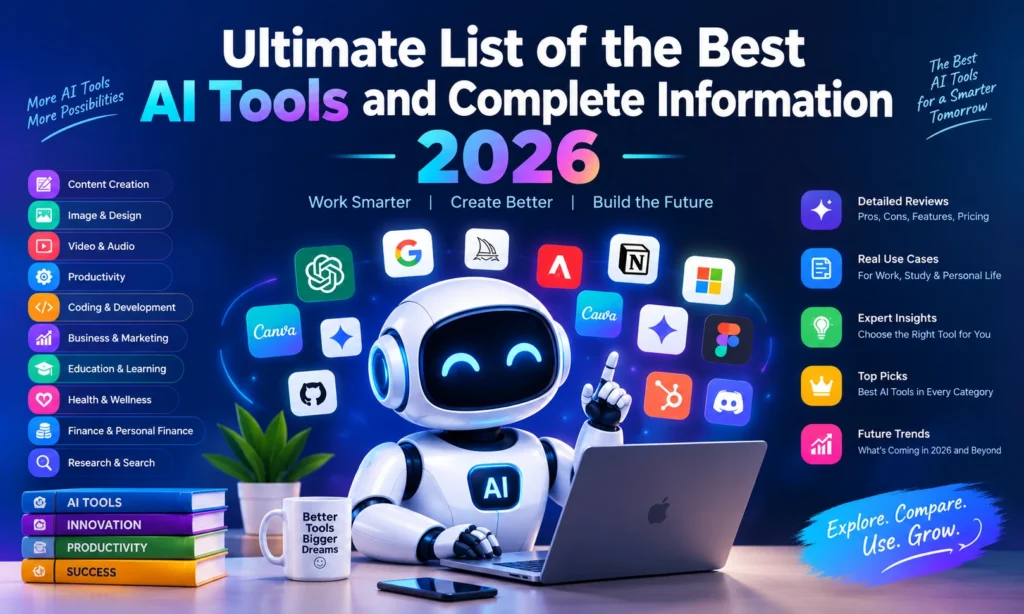
Welcome to ZeexasTech.com, your online resource for AI tools, Microsoft Excel tutorials, technology guides, productivity tips, and digital solutions.
I’m Vishal Kumar, the founder of ZeexasTech.com. I share informative articles designed to help readers discover useful AI tools, understand Excel formulas, improve their digital skills, and find smarter ways to complete everyday tasks.
Our mission is to provide clear, practical, and beginner-friendly technology content that helps students, professionals, content creators, and businesses make better use of modern digital tools.
Artificial intelligence is transforming the way people work, learn, create content, develop software, and manage businesses. In 2026, AI tools are no longer limited to answering questions or generating simple text. They can help users research information, analyze documents, create professional images, edit videos, write code, automate repetitive tasks, build presentations, and improve productivity.
Whether you are a student, blogger, freelancer, digital marketer, content creator, business owner, or software developer, choosing the right AI tools can save time and help you accomplish more with fewer resources.
However, the growing number of AI platforms makes choosing the best option challenging. Some tools specialize in writing, others focus on research, and many are designed for image generation, video production, coding, or business automation. Some offer free plans, while others require a paid subscription for advanced features.
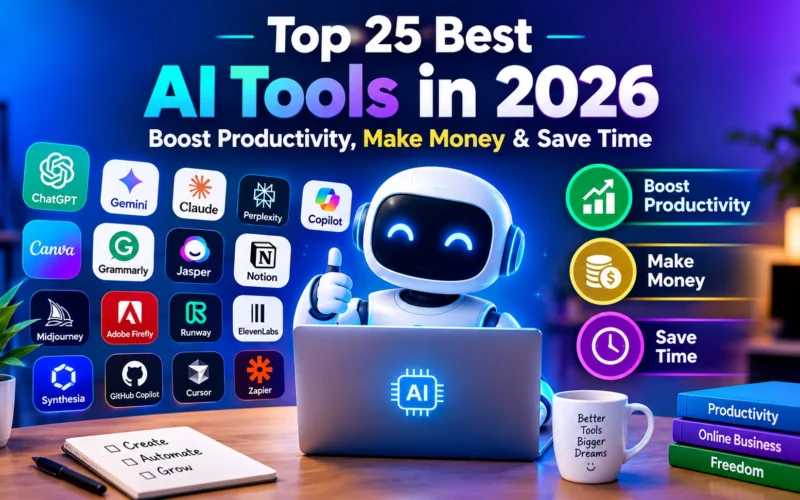
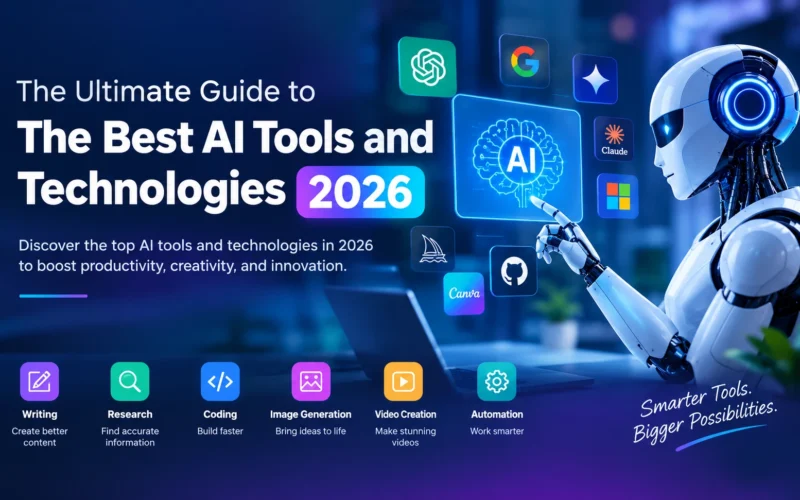
This comprehensive guide explores the ultimate list of the best AI tools in 2026, including their main features, practical applications, advantages, limitations, and potential costs. It will also help you understand which tools are worth trying and how to build an AI toolkit that suits your needs.
Table of Contents
- What Are AI Tools?
- Benefits of Using AI Tools in 2026
- Best AI Chatbots and General-Purpose Assistants
- Best AI Writing Tools
- Best AI Research Tools
- Best AI Image Generation Tools
- Best AI Video Creation Tools
- Best AI Coding Tools
- Best AI Productivity Tools
- Best AI Marketing and SEO Tools
- Best AI Audio and Voice Tools
- Best AI Presentation Tools
- Best AI Tools for Students
- Best AI Tools for Businesses
- Free AI Tools You Should Try
- How to Choose the Best AI Tool
- Advantages and Limitations of AI Tools
- Tips for Getting Better Results From AI
- Frequently Asked Questions
- Conclusion
1. What Are AI Tools?
AI tools are software applications that use artificial intelligence technologies to perform tasks that traditionally require human intelligence. Depending on the application, these technologies may include large language models, machine learning, computer vision, speech recognition, natural language processing, and generative AI.
These tools can understand instructions, identify patterns, summarize information, generate new content, and assist with complex workflows.
For example, an AI writing assistant can create a first draft of a blog post, an image generator can turn a written description into an illustration, and an AI coding assistant can suggest improvements to a software project.
AI tools generally fall into several categories:
- Conversational AI: Answers questions and assists with everyday tasks.
- AI writing: Generates, edits, rewrites, and summarizes text.
- AI research: Finds information and helps organize evidence.
- AI image generation: Creates illustrations, graphics, and visual concepts.
- AI video creation: Generates video clips, edits footage, and assists with production.
- AI coding: Helps developers write, debug, and understand code.
- AI productivity: Supports meetings, documents, project management, and workflows.
- AI marketing: Helps with content planning, SEO, advertising, and customer communication.
- AI audio: Generates speech, transcribes recordings, and assists with audio production.
- AI automation: Connects applications and automates repetitive processes.
The most effective AI tool depends on the task you want to complete. A blogger may need writing and SEO tools, while a developer may benefit more from coding assistants and automation platforms.
2. Benefits of Using AI Tools in 2026
AI tools offer several practical advantages for individuals and organizations.
Save Time on Repetitive Tasks
AI can help automate repetitive activities such as summarizing documents, drafting emails, organizing information, generating reports, and creating content outlines.
Instead of starting every task from scratch, users can provide instructions and review an initial result.
Improve Productivity
AI assistants can help users brainstorm ideas, explain difficult concepts, prepare plans, and break large projects into smaller tasks.
For example, a small business owner can use AI to draft product descriptions, prepare customer support responses, and plan social media content.
Reduce Content Creation Time
Bloggers and marketers can use AI to generate topic ideas, create outlines, rewrite paragraphs, and develop headline variations.
Human editing remains essential for accuracy, originality, and a consistent brand voice, but AI can make the initial production process more efficient.
Support Learning and Education
Students can use AI to explain complicated subjects, create practice questions, summarize study materials, and identify gaps in their understanding.
AI works best as a learning assistant rather than a replacement for independent thinking.
Make Creative Work More Accessible
Image, video, and audio tools allow people to explore creative ideas without mastering every traditional production technique.
A beginner can generate visual concepts, create a video storyboard, or produce a draft voice-over with relatively little technical experience.
Support Better Decision-Making
AI can organize information, identify trends, compare alternatives, and explain possible scenarios. When used with reliable data and human judgment, these capabilities can support better decisions.
However, AI-generated conclusions should be checked before being used for financial, legal, medical, or other high-impact decisions.
3. Best AI Chatbots and General-Purpose Assistants
General-purpose AI assistants are among the most versatile tools available. They can help with writing, research, learning, brainstorming, planning, data analysis, and coding.
1. ChatGPT
Best for: General-purpose assistance, writing, brainstorming, analysis, and creative tasks.
ChatGPT is a versatile AI assistant that can help users answer questions, draft articles, summarize documents, develop ideas, analyze supported file formats, and work through technical problems.
Its usefulness comes from the variety of tasks it can support through a conversational interface.
Key features:
- Generates and edits written content.
- Explains complex topics in simple language.
- Helps with programming and troubleshooting.
- Supports compatible file and data analysis workflows.
- Assists with brainstorming, planning, and outlining.
- Offers image, voice, and other capabilities depending on the available model and plan.
Who should use it?
Students, bloggers, researchers, marketers, freelancers, professionals, and business owners can all benefit from ChatGPT.
For example, a blogger could use it to develop a content calendar, prepare an article outline, improve a title, and generate frequently asked questions for a website.
Advantages: Versatile, accessible, useful for many workflows, and suitable for beginners.
Limitations: Responses may contain inaccurate information, and some features or usage limits depend on the plan.
2. Google Gemini
Best for: General AI assistance and workflows connected to Google’s ecosystem.
Google Gemini is an AI assistant that can help users write, summarize, brainstorm, understand supported media, and explore ideas. Depending on the product and account, it can also integrate with Google services.
Key features:
- Writing and summarization.
- Assistance with research and explanations.
- Support for compatible images and documents.
- Help with planning and idea generation.
- Integration with selected Google products and services, depending on access.
Who should use it?
Students, professionals, content creators, and people who regularly use Google Workspace may find Gemini useful.
Advantages: Convenient for Google-centered workflows and capable of handling a variety of tasks.
Limitations: Features, integrations, and usage allowances vary by account, region, and subscription.
3. Claude
Best for: Long-form writing, document analysis, structured reasoning, and coding assistance.
Claude, developed by Anthropic, is an AI assistant designed to help users work with text, analyze information, and solve problems. It can be particularly useful when a task requires careful instructions and organized explanations.
Key features:
- Drafting and editing long documents.
- Summarizing complex material.
- Analyzing supported file uploads.
- Assisting with programming and code review.
- Organizing ideas into structured reports.
- Supporting detailed brainstorming and problem-solving.
Who should use it?
Writers, researchers, developers, consultants, and professionals working with lengthy documents.
Advantages: Useful for structured writing, document-heavy work, and detailed analysis.
Limitations: Usage limits and available capabilities depend on the plan, and generated information still requires verification.
4. Microsoft Copilot
Best for: Microsoft-centered productivity and office workflows.
Microsoft Copilot provides AI assistance for tasks such as drafting text, summarizing information, answering questions, and supporting productivity. Certain Copilot experiences integrate with Microsoft 365 applications.
Key features:
- Writing and summarization.
- Assistance with office-related tasks.
- Support for selected Microsoft applications.
- Help with presentations, documents, and communication.
- AI assistance for compatible business workflows.
Who should use it?
Office professionals, students, organizations, and businesses that rely on Microsoft products.
Advantages: Fits naturally into Microsoft-centered work environments.
Limitations: Advanced integrations and organizational features may require eligible subscriptions or licenses.
5. Meta AI
Best for: Everyday AI assistance within supported Meta applications.
Meta AI is an AI assistant available through supported Meta products and experiences. Depending on availability, users can ask questions, explore ideas, and perform selected creative tasks.
Key features:
- Conversational assistance.
- General knowledge questions.
- Brainstorming and writing support.
- Selected image-related capabilities.
- Access through supported Meta platforms.
Who should use it?
People who want convenient AI assistance while using supported Meta services.
Advantages: Convenient access in compatible environments.
Limitations: Features and availability vary by country, platform, and account.
General-Purpose AI Tools Compared
| Tool | Best use | Typical access model |
|---|---|---|
| ChatGPT | Everyday tasks and content creation | Free and paid options |
| Google Gemini | General assistance and Google workflows | Free and paid options |
| Claude | Long documents and structured writing | Free and paid options |
| Microsoft Copilot | Office productivity | Free and paid options |
| Meta AI | Everyday conversational assistance | Availability varies |
Free access, paid features, and usage limits can change. Check each provider’s official website before subscribing.
4. Best AI Writing Tools
AI writing tools help users generate, edit, refine, and organize written content. They can be valuable for bloggers, copywriters, students, marketers, and businesses.
6. Grammarly
Best for: Grammar, clarity, and writing improvement.
Grammarly helps users improve written communication by identifying grammar problems, suggesting clearer phrasing, and supporting tone adjustments.
Main uses:
- Correcting grammar and spelling.
- Improving sentence clarity.
- Refining professional emails.
- Checking tone and readability.
- Editing business and academic writing.
Advantages: Useful for polishing existing drafts and improving everyday communication.
Limitations: Suggestions should be reviewed to preserve the writer’s intended meaning and voice.
7. Jasper
Best for: Marketing content and brand-oriented writing workflows.
Jasper is an AI content platform focused on marketing and business communication. It can help teams develop marketing copy, campaign ideas, and content aligned with their brand guidelines.
Main uses:
- Marketing copy.
- Advertising concepts.
- Product descriptions.
- Campaign content.
- Brand-consistent messaging.
Advantages: Designed around marketing workflows and team content production.
Limitations: Its value depends on your content volume, team requirements, and subscription budget.
8. Writesonic
Best for: Marketing content and AI-assisted content workflows.
Writesonic offers tools for creating marketing copy and other forms of written content. Its broader feature set and availability can vary by plan.
Main uses:
- Blog outlines and drafts.
- Advertising copy.
- Landing-page text.
- Product descriptions.
- Content ideation.
Advantages: Useful for marketers who need multiple types of content.
Limitations: Generated drafts need editing, factual checks, and differentiation from competing content.
9. QuillBot
Best for: Paraphrasing and editing existing text.
QuillBot offers writing utilities such as paraphrasing and summarization. It can help users explore alternative wording and improve readability.
Main uses:
- Rephrasing sentences.
- Summarizing material.
- Improving clarity.
- Reviewing grammar.
- Finding alternative expressions.
Advantages: Convenient for revising existing drafts.
Limitations: Paraphrasing does not guarantee originality, accuracy, or proper attribution. Always cite sources when required.
10. DeepL Write
Best for: Improving clarity and professional wording.
DeepL Write helps users refine sentences, adjust phrasing, and improve the clarity of supported languages.
Main uses:
- Editing professional documents.
- Refining emails.
- Improving sentence structure.
- Reviewing word choice.
- Supporting multilingual communication.
Advantages: Useful for polishing text that already exists.
Limitations: Language support and editing features vary, and specialized terminology may need manual review.
5. Best AI Research Tools
Research-oriented AI tools help users discover information, summarize sources, and organize evidence. They are useful for students, journalists, analysts, bloggers, and professionals.
11. Perplexity
Best for: AI-assisted web research with source links.
Perplexity is an AI-powered answer and research platform that can search for information and present responses alongside references.
Key features:
- Search-oriented question answering.
- Source-linked responses.
- Follow-up research questions.
- Topic exploration.
- Research assistance for articles and reports.
Advantages: Convenient for discovering sources and exploring unfamiliar topics.
Limitations: Citations must be opened and checked. A linked source does not automatically prove every statement in an AI-generated answer.
12. NotebookLM
Best for: Working with a collection of documents and source materials.
NotebookLM helps users understand information from supported sources they provide or add to a notebook. It can organize material and generate summaries or other source-grounded study aids.
Key features:
- Document and source summarization.
- Question answering based on provided materials.
- Study-guide creation.
- Organization of research notes.
- Audio-style summaries where supported.
Advantages: Helpful for studying, analyzing reference documents, and preparing research notes.
Limitations: Results depend on source quality and the materials available to the tool.
13. Elicit
Best for: Academic research and literature discovery.
Elicit is designed to support research workflows, particularly those involving scientific literature and academic papers.
Main uses:
- Discovering relevant papers.
- Organizing research findings.
- Comparing information across studies.
- Supporting literature reviews.
- Extracting relevant details from research sources.
Advantages: Helps structure research tasks that might otherwise involve extensive manual reading.
Limitations: Research findings must be verified against original papers, especially for scientific or high-stakes conclusions.
14. Consensus
Best for: Exploring scientific questions using research literature.
Consensus is an AI-assisted research search engine focused on scientific literature. It helps users explore questions and identify relevant academic evidence.
Main uses:
- Exploring research questions.
- Discovering scientific studies.
- Reviewing evidence on a topic.
- Finding relevant academic publications.
Advantages: Useful for evidence-oriented research.
Limitations: A summary of studies is not a substitute for examining their methods, sample sizes, limitations, and conclusions.
6. Best AI Image Generation Tools
AI image generators create visual content from written prompts and, in some cases, reference images. They are useful for blog graphics, advertising concepts, illustrations, thumbnails, product mockups, and creative projects.
15. Midjourney
Best for: Artistic images and creative visual concepts.
Midjourney is known for AI-generated visual artwork and stylized imagery. It can help creators explore visual directions for projects.
Key features:
- Text-to-image generation.
- Artistic styles and visual variations.
- Concept development.
- Creative illustration.
- Visual exploration for campaigns.
Advantages: Useful for distinctive, artistic visual concepts.
Limitations: Access, pricing, and generation options depend on the current plan. Exact text and highly controlled layouts may require additional editing.
16. Adobe Firefly
Best for: AI-assisted design and creative workflows.
Adobe Firefly offers generative AI capabilities for creating and modifying visual content. It can fit into broader Adobe creative workflows.
Main uses:
- Generating visual concepts.
- Editing and extending images.
- Creating design variations.
- Supporting advertising concepts.
- Exploring creative compositions.
Advantages: Particularly relevant to people who already use Adobe’s creative products.
Limitations: Features and usage allowances depend on the available product and plan. Users should review applicable commercial-use terms.
17. Canva AI
Best for: Beginner-friendly graphic design and visual content creation.
Canva combines design templates with AI-assisted capabilities that can help users produce graphics, presentations, social posts, and other visual materials.
Key features:
- Design templates.
- AI-assisted content creation.
- Presentation design.
- Social media graphics.
- Visual editing and layout tools.
Advantages: Accessible for beginners and useful for producing complete designs rather than isolated images.
Limitations: Some AI features and usage allowances may be restricted to particular plans.
18. Leonardo AI
Best for: Creative illustrations, concept art, and visual experimentation.
Leonardo AI provides generative visual tools for producing artwork and exploring creative concepts.
Main uses:
- Illustrations.
- Game and character concepts.
- Marketing visuals.
- Creative assets.
- Style exploration.
Advantages: Useful for users who want to experiment with different visual directions.
Limitations: Output consistency and commercial-use conditions depend on the workflow and applicable terms.
19. Ideogram
Best for: Graphic concepts and images that include prominent text.
Ideogram is an image-generation platform often used for graphic concepts, posters, logos-in-concept, and visual designs involving typography.
Main uses:
- Poster concepts.
- Promotional graphics.
- Typography-focused artwork.
- Social media visuals.
- Creative advertising mockups.
Advantages: Worth considering when text placement is an important part of the visual concept.
Limitations: Generated lettering may still contain errors and should be checked before publication.
20. Stable Diffusion
Best for: Flexible image generation and customizable workflows.
Stable Diffusion refers to a family of image-generation models and related tools that support customizable visual workflows. Depending on the implementation, users may be able to run models locally or through hosted services.
Main uses:
- AI-generated artwork.
- Custom visual workflows.
- Image editing and transformation.
- Experimental creative projects.
- Specialized image-generation pipelines.
Advantages: Flexible implementations and opportunities for customization.
Limitations: Setup, hardware requirements, licensing, and technical complexity vary by model and implementation.
7. Best AI Video Creation Tools
AI video tools can help creators generate short clips, produce promotional videos, create visual effects, and edit existing footage. They are particularly useful for marketing teams and social media creators.
21. Runway
Best for: AI-assisted video generation and creative video production.
Runway provides AI tools for video creation and editing workflows. Depending on current capabilities, users can generate or transform visual footage and explore different creative effects.
Main uses:
- Generating video concepts.
- Creating visual sequences.
- Experimenting with cinematic styles.
- Supporting creative editing.
- Producing promotional content.
Advantages: Useful for experimenting with AI-assisted video production.
Limitations: Generation limits, output quality, and available controls vary by model and subscription.
22. Synthesia
Best for: Presenter-style videos and business training content.
Synthesia helps users create videos using AI presenters and supported text-to-video workflows.
Main uses:
- Training videos.
- Internal business communication.
- Educational presentations.
- Product explainers.
- Multilingual corporate content.
Advantages: Can reduce the need for traditional filming in certain presenter-led workflows.
Limitations: Suitable use depends on the desired presentation style, available avatars, and licensing terms.
23. HeyGen
Best for: AI avatars and presenter-style video content.
HeyGen provides AI video creation capabilities involving avatars, voice, and supported video translation workflows.
Main uses:
- Marketing explainers.
- Presenter-led social videos.
- Product introductions.
- Multilingual communication.
- Training materials.
Advantages: Useful for producing presenter-style content without recording every version from scratch.
Limitations: Users should obtain appropriate consent before cloning or representing a real person’s voice or likeness.
24. Pika
Best for: Creative AI-generated video clips.
Pika provides tools for generating and transforming video content using AI-assisted workflows.
Main uses:
- Short creative clips.
- Social media experiments.
- Visual effects.
- Animated concepts.
- Creative storytelling.
Advantages: Useful for quick visual experiments and short-form concepts.
Limitations: Complex motion, consistent characters, and precise scene control may require multiple attempts.
25. CapCut
Best for: Social media video editing.
CapCut combines video editing features with selected AI-assisted capabilities. It is useful for creators who need to produce short videos for online platforms.
Main uses:
- Short-form video editing.
- Captions and subtitles.
- Audio editing.
- Templates and effects.
- Supported AI-assisted editing tasks.
Advantages: Accessible editing workflows for social media content.
Limitations: Features, export options, and availability may differ by region, device, and plan.
8. Best AI Coding Tools
AI coding assistants help developers write code, understand unfamiliar projects, identify potential errors, generate tests, and work more efficiently.
26. GitHub Copilot
Best for: AI assistance inside software development environments.
GitHub Copilot supports software development by suggesting code and helping developers work through programming tasks.
Key features:
- Code completion.
- Code explanations.
- Assistance with debugging.
- Test generation support.
- Integration with supported development environments.
Advantages: Fits into established coding workflows.
Limitations: Generated code can contain bugs, security problems, or outdated approaches. Review and test suggestions before using them.
27. Cursor
Best for: AI-assisted coding across project files.
Cursor is an AI-oriented code editor designed to help developers understand and modify code within a project.
Main uses:
- Navigating codebases.
- Generating code changes.
- Explaining existing code.
- Refactoring.
- Assisting with debugging.
Advantages: Useful for developers working on projects involving multiple files.
Limitations: Developers must review proposed changes carefully and avoid exposing sensitive source code without authorization.
28. Windsurf
Best for: AI-supported software development workflows.
Windsurf is a development environment built around AI-assisted coding and project workflows.
Main uses:
- Writing and modifying code.
- Understanding project structure.
- Assisting with implementation.
- Exploring code changes.
- Supporting development tasks.
Advantages: Designed to integrate AI assistance into the coding process.
Limitations: Results depend on project context, permissions, and the quality of developer instructions.
29. Replit
Best for: Building and experimenting with applications online.
Replit provides a browser-based development environment with AI-assisted features for supported coding workflows.
Main uses:
- Learning programming.
- Prototyping applications.
- Building small projects.
- Experimenting with code.
- Collaborating on supported projects.
Advantages: Convenient for getting started without a complex local setup.
Limitations: Hosting, compute resources, and advanced features may depend on the plan.
30. Tabnine
Best for: AI coding assistance and code completion.
Tabnine offers AI-powered coding assistance designed to support developers working in compatible development environments.
Main uses:
- Code completion.
- Development assistance.
- Reducing repetitive coding.
- Supporting team workflows.
- Improving coding efficiency.
Advantages: Useful for teams evaluating AI coding assistance within established development processes.
Limitations: Compatibility, privacy options, and features should be checked against organizational requirements.
9. Best AI Productivity Tools
Productivity tools help individuals and teams manage documents, meetings, projects, notes, and recurring tasks.
31. Notion AI
Best for: Notes, documentation, and workspace assistance.
Notion AI adds AI-assisted capabilities to supported Notion workflows.
Main uses:
- Summarizing notes.
- Drafting documents.
- Organizing information.
- Improving written content.
- Working with project documentation.
Advantages: Convenient when notes and projects already live in Notion.
Limitations: AI availability and usage terms depend on the current subscription and workspace configuration.
32. Otter.ai
Best for: Meeting transcription and summaries.
Otter.ai helps users capture and organize meeting conversations through supported transcription and summarization features.
Main uses:
- Meeting notes.
- Conversation transcription.
- Action-item summaries.
- Interview notes.
- Reviewing recorded discussions.
Advantages: Can reduce manual note-taking.
Limitations: Transcription accuracy depends on audio quality, speaker clarity, language support, and other factors. Obtain appropriate consent before recording meetings.
33. Fireflies.ai
Best for: Meeting documentation and conversation analysis.
Fireflies.ai provides tools for recording, transcribing, summarizing, and organizing supported meetings.
Main uses:
- Meeting transcripts.
- Summaries.
- Searchable conversation records.
- Action-item tracking.
- Reviewing team discussions.
Advantages: Helpful for teams that need searchable meeting information.
Limitations: Privacy settings, meeting consent, and access controls should be reviewed before deployment.
34. Zapier
Best for: Connecting applications and automating workflows.
Zapier connects supported applications so users can automate tasks between services. Its AI-related features can support selected automation workflows.
Main uses:
- Moving information between apps.
- Automating notifications.
- Creating lead-management workflows.
- Updating records.
- Triggering routine business processes.
Advantages: Reduces manual work across compatible applications.
Limitations: Complex automations require careful testing, and paid usage may be necessary for larger workflows.
35. Make
Best for: Visual workflow automation.
Make allows users to connect applications and design automated workflows through a visual interface.
Main uses:
- Automating business processes.
- Connecting web applications.
- Processing information.
- Creating multi-step workflows.
- Integrating supported AI services.
Advantages: Flexible workflow design for users who need more than simple one-step automation.
Limitations: Complex scenarios can be difficult to maintain without clear documentation and testing.
10. Best AI Marketing and SEO Tools
AI marketing tools can support keyword research, content optimization, campaign planning, competitive analysis, and marketing production. They should complement a sound SEO strategy rather than replace it.
36. Semrush
Best for: SEO research and digital marketing analysis.
Semrush provides SEO and digital marketing tools, including keyword research, competitor analysis, site auditing, and supported AI-assisted workflows.
Main uses:
- Keyword discovery.
- Competitor research.
- Website auditing.
- Content planning.
- Performance monitoring.
Advantages: Combines several marketing research functions in one platform.
Limitations: Advanced research features can require a paid plan, and keyword metrics are estimates rather than guaranteed rankings.
37. Ahrefs
Best for: Backlink research, keyword analysis, and SEO investigation.
Ahrefs provides SEO tools for exploring backlinks, keywords, competitor websites, and organic search performance.
Main uses:
- Backlink analysis.
- Keyword research.
- Competitor investigation.
- Content opportunity discovery.
- Website monitoring.
Advantages: Useful for developing evidence-based SEO strategies.
Limitations: Access to advanced features can be costly, and estimated search metrics should not be treated as exact figures.
38. Surfer
Best for: Content optimization for search.
Surfer offers content-focused SEO tools that help users evaluate and improve pages in relation to search topics and competing results.
Main uses:
- Content briefs.
- On-page optimization.
- Topic coverage analysis.
- Content improvement.
- Editorial workflows.
Advantages: Provides a structured way to review content before publication.
Limitations: Following optimization suggestions mechanically can create unnatural writing. User value and search intent should remain the priority.
39. Frase
Best for: SEO content briefs and research-assisted writing.
Frase supports content research and optimization workflows for users creating search-focused articles and landing pages.
Main uses:
- Topic research.
- Article outlines.
- Content briefs.
- Search-result analysis.
- Content optimization.
Advantages: Can streamline planning and preparation.
Limitations: Automated outlines should be supplemented with original experience, accurate facts, and useful examples.
40. HubSpot
Best for: Marketing, customer relationship management, and business content workflows.
HubSpot offers marketing, sales, customer service, and CRM products, with AI capabilities available in supported workflows.
Main uses:
- Marketing content assistance.
- Customer communication.
- CRM organization.
- Campaign management.
- Sales and support workflows.
Advantages: Connects marketing activities with customer and sales information.
Limitations: Costs and complexity can increase as teams require more advanced features.
11. Best AI Audio and Voice Tools
AI audio tools can convert text into speech, transcribe recordings, clean up audio, and support voice-based content production.
41. ElevenLabs
Best for: AI voice generation and supported speech workflows.
ElevenLabs offers AI audio tools for generating speech and supporting other voice-related applications.
Main uses:
- Voice-overs.
- Narration.
- Audiobook production.
- Supported dubbing workflows.
- Audio content experiments.
Advantages: Useful for creators who need spoken audio without recording every line manually.
Limitations: Voice quality, language support, and usage allowances depend on the model and plan. Voice cloning should only be performed with appropriate authorization.
42. Descript
Best for: Editing audio and video through transcript-based workflows.
Descript combines audio and video editing features with transcript-oriented workflows and selected AI assistance.
Main uses:
- Podcast editing.
- Video editing.
- Transcription.
- Removing unwanted speech segments.
- Preparing spoken content for publication.
Advantages: Can make editing recorded conversations more approachable.
Limitations: Complex editing tasks may still require conventional audio or video tools.
43. Adobe Podcast
Best for: Improving speech recording quality.
Adobe Podcast offers browser-based tools for supported speech and podcast workflows, including audio enhancement capabilities.
Main uses:
- Improving voice recordings.
- Preparing spoken audio.
- Supporting podcast production.
- Cleaning up selected recordings.
Advantages: Helpful for creators recording voice-overs or podcasts in ordinary environments.
Limitations: Processing may change the character of the original audio, so review the result before publishing.
12. Best AI Presentation Tools
AI presentation tools help users turn ideas, outlines, and source materials into organized slides.
44. Gamma
Best for: Creating presentations and visual documents from prompts.
Gamma helps users generate and organize presentations and other visual documents through AI-assisted workflows.
Main uses:
- Business presentations.
- Educational slides.
- Project proposals.
- Visual reports.
- Early-stage presentation drafts.
Advantages: Can speed up the process of turning an outline into a structured presentation.
Limitations: Generated layouts and factual content should be reviewed before sharing with an audience.
45. Beautiful.ai
Best for: Structured business presentations.
Beautiful.ai provides presentation-design tools intended to help users create polished slides with consistent layouts.
Main uses:
- Business proposals.
- Sales presentations.
- Company updates.
- Pitch decks.
- Professional reports.
Advantages: Helps maintain visual consistency across slides.
Limitations: Custom designs and advanced formatting may require additional editing.
46. Canva Presentations
Best for: Designing accessible, visually appealing slides.
Canva offers presentation templates and design tools, including selected AI-assisted features.
Main uses:
- Classroom presentations.
- Business slides.
- Webinar materials.
- Marketing presentations.
- Visual storytelling.
Advantages: Useful for people who want to combine templates, graphics, and presentation layouts in one workspace.
Limitations: Some design and AI features require paid access.
13. Best AI Tools for Students
Students can use AI to learn more efficiently, organize study materials, and practice difficult concepts. The best results come from using AI to strengthen understanding rather than simply copying answers.
Recommended tools
47. Khan Academy’s Khanmigo
Khanmigo is an AI-supported learning experience associated with Khan Academy. Its supported features are designed to encourage learning and help users work through educational material.
Best for: Guided learning and educational support.
48. Quizlet
Quizlet provides digital study tools, flashcards, and selected AI-assisted learning features.
Best for: Revision, memorization, and practice.
49. Wolfram Alpha
Wolfram Alpha is a computational knowledge engine that can help users explore mathematics, science, and other technical subjects.
Best for: Calculations, mathematical exploration, and technical questions.
50. Photomath
Photomath helps users explore mathematical problems and supported step-by-step explanations.
Best for: Practicing mathematics and understanding solution methods.
How students can use AI effectively
- Ask for an explanation before asking for the final answer.
- Generate practice questions for revision.
- Summarize notes and compare the summary with the original material.
- Request examples of difficult concepts.
- Use AI to identify weaknesses in understanding.
- Follow school or university rules on AI-assisted work.
- Verify important facts and calculations independently.
AI should support learning, not replace the thinking and practice required to develop genuine skills.
14. Best AI Tools for Businesses
Businesses can use AI to improve customer communication, organize information, assist employees, automate routine work, and support content production.
The most suitable tool depends on the company’s existing systems, privacy requirements, budget, and workflow.
Customer Support
Tools such as Intercom and Zendesk offer customer-service platforms with AI-assisted features in supported plans.
Websites:
Businesses can explore AI for handling common questions, organizing support requests, drafting replies, and assisting human agents.
Sales and CRM
Salesforce and HubSpot provide CRM platforms with AI-related capabilities across selected sales and customer-management workflows.
Websites:
Potential uses include summarizing customer interactions, assisting with communication, organizing sales information, and supporting reporting.
Business Automation
Zapier and Make can connect supported business applications and automate routine operations.
Potential uses include lead notifications, data transfers, reporting workflows, and repetitive administrative tasks.
Data Analysis
General-purpose AI assistants and specialized analytics tools can help users explore datasets, explain trends, prepare summaries, and develop visualizations.
For business-critical analysis, verify the underlying calculations and data sources rather than relying solely on AI-generated conclusions.
Document and Knowledge Management
Tools such as Notion AI and NotebookLM can support document organization, internal knowledge workflows, and research based on available sources.
Before using AI with company documents, review data-handling policies, access permissions, retention terms, and confidentiality requirements.
15. Free AI Tools You Should Try in 2026
If you are starting with AI, you do not necessarily need a paid subscription. Several platforms provide free access, although usage limits and available features vary.
| Tool | Category | Useful starting point |
|---|---|---|
| ChatGPT | General AI | Writing, explanations, brainstorming |
| Google Gemini | General AI | Questions, summaries, idea generation |
| Claude | General AI | Writing and document assistance |
| Perplexity | Research | Finding sources and exploring topics |
| NotebookLM | Research and learning | Studying supplied documents |
| Canva | Design | Graphics and presentation creation |
| Grammarly | Writing | Grammar and clarity |
| QuillBot | Writing | Paraphrasing and summaries |
| GitHub Copilot | Coding | Code assistance, subject to current plan |
| CapCut | Video | Short-form editing |
| Replit | Coding | Online development and prototypes |
| Otter.ai | Productivity | Meeting transcription, subject to plan |
Important: Free does not always mean unlimited. A provider may restrict the number of prompts, image generations, audio minutes, model choices, or other features. Review the official plan details before depending on a tool for ongoing work.
16. How to Choose the Best AI Tool
Choosing AI software becomes easier when you start with a specific problem instead of subscribing to several popular platforms at once.
Step 1: Identify Your Main Goal
Ask what you want AI to help you accomplish.
Examples include:
- Writing articles and website content.
- Researching topics and collecting sources.
- Creating images for blogs.
- Editing videos for social media.
- Learning programming.
- Automating repetitive tasks.
- Managing documents and meetings.
A clear goal narrows the options considerably.
Step 2: Evaluate Free and Paid Plans
Start with free access when possible. Test the tool using real tasks and determine whether it produces enough value to justify a subscription.
Consider usage limits, export options, collaboration features, and the cost of any additional services.
Step 3: Check Ease of Use
A powerful tool is not necessarily the best tool for you if it requires extensive setup or technical knowledge.
Choose software that fits your experience level and existing workflow.
Step 4: Test Output Quality
Try at least three realistic tasks before committing to a tool.
For example, a blogger might test whether the tool can produce a useful outline, accurately summarize reliable sources, and improve a draft without introducing unsupported claims.
Step 5: Review Privacy and Security
Do not assume that every AI platform handles information in the same way.
Before uploading confidential files, personal information, customer records, or proprietary code, review the provider’s data policies and your organization’s rules.
Step 6: Compare Total Cost
The total cost may include more than the subscription itself. Consider additional usage charges, team licenses, integrations, storage, and time spent reviewing results.
Step 7: Choose Tools That Work Together
A small, compatible toolkit can be more useful than a long list of disconnected subscriptions.
For example, a content creator might use one general AI assistant for planning, one research platform for sources, and one design tool for graphics.
17. Advantages and Limitations of AI Tools
AI tools provide meaningful benefits, but they also have limitations that users should understand.
Advantages
Faster workflows: AI can speed up drafting, summarization, brainstorming, and repetitive tasks.
Creative support: It helps users explore different approaches and generate initial concepts.
Accessibility: Many tools are easy to use without advanced technical training.
Scalability: Businesses can use AI to support larger volumes of routine work.
Personalized explanations: AI assistants can often explain a subject at different levels of complexity.
Broad applications: AI can support writing, design, coding, education, analysis, and many other fields.
Limitations
Incorrect information: AI systems can generate confident but false statements.
Limited context: A tool may misunderstand an instruction or miss important details.
Generic output: Poor prompts often produce repetitive or unoriginal content.
Privacy concerns: Uploading sensitive information may create security or compliance risks.
Cost: Premium subscriptions and usage-based services can become expensive.
Bias: Outputs may reflect limitations or biases in training data and system design.
Human review requirements: Important work still needs appropriate supervision, testing, and fact-checking.
The most effective approach is to use AI for assistance while keeping humans responsible for final decisions, quality control, and accountability.
18. Tips for Getting Better Results From AI
Learning how to communicate with AI tools is an important skill. Clear instructions usually produce more useful results than vague requests.
Be Specific About Your Goal
Instead of writing, “Write an article about SEO,” try:
“Create a beginner-friendly guide to technical SEO for small business websites. Include practical examples, a checklist, common mistakes, and a concise conclusion.”
The second prompt explains the topic, audience, and expected structure.
Provide Relevant Context
Explain your audience, industry, project, and intended outcome. If you want an article for beginners, say so. If you need a professional email, specify the recipient and purpose.
Specify the Output Format
Tell the AI whether you want a table, numbered list, tutorial, report, checklist, or step-by-step guide.
Request Revisions
Your first result does not have to be the final version. Ask the tool to improve clarity, shorten paragraphs, add examples, or adjust the tone.
Verify Important Information
Check dates, statistics, technical instructions, quotations, citations, and product claims against trustworthy sources.
Add Human Experience
For blog posts, include original examples, practical observations, demonstrations, and expert insights. These make content more useful than a generic AI-generated overview.
Protect Confidential Information
Avoid submitting passwords, private customer records, confidential business documents, or sensitive personal information unless the tool is approved for that use and appropriate protections are in place.
Measure the Results
Track whether AI genuinely improves your workflow. Useful measures might include time saved, error rates, reader engagement, task completion, or customer satisfaction.
19. Frequently Asked Questions About AI Tools
The best tools depend on your needs. ChatGPT and Google Gemini are versatile general-purpose assistants; Claude is useful for long documents and structured writing; Perplexity supports source-oriented research; Canva AI helps with visual design; GitHub Copilot and Cursor assist with coding; and Runway supports AI-assisted video workflows.
No single tool is best for every task.
Some tools provide free plans or limited free access, including ChatGPT, Google Gemini, Claude, Perplexity, Canva, and other platforms listed in this guide.
However, free access may include usage limits, restricted features, or account requirements. Check each provider’s current terms.
ChatGPT, Gemini, Claude, NotebookLM, Quizlet, Wolfram Alpha, and Photomath can support different learning tasks.
For example, NotebookLM is useful for working with supplied study materials, while Wolfram Alpha can assist with mathematical and technical questions. The best choice depends on the subject and learning objective.
ChatGPT, Claude, Jasper, and Writesonic are options for drafting and refining blog content.
A strong workflow combines AI-assisted planning and drafting with independent research, human editing, factual verification, and original examples.
Semrush and Ahrefs are useful for SEO research and website analysis, while Surfer and Frase support content optimization and planning.
General-purpose assistants can help brainstorm topics and prepare outlines. However, SEO performance depends on content usefulness, search intent, website quality, competition, and many other factors. No AI tool can guarantee first-page rankings.
Midjourney, Adobe Firefly, Canva AI, Leonardo AI, Ideogram, and Stable Diffusion are worth exploring.
Choose according to the visual style, editing requirements, typography needs, technical experience, and commercial-use terms.
Runway, Synthesia, HeyGen, Pika, and CapCut support different types of video workflows.
Runway and Pika are options for creative generation, Synthesia and HeyGen are suited to presenter-style content, and CapCut is useful for editing social media videos.
AI can automate or accelerate some tasks, but it does not eliminate the need for human judgment, domain knowledge, creativity, communication, and accountability.
In many workflows, AI is most useful when it supports a person rather than operating without supervision.
AI tools can be useful, but safety depends on the provider, the information submitted, and the intended use.
Review privacy policies, use strong account security, protect confidential information, and verify important outputs. Businesses should also consider permissions, compliance, and data retention.
AI-assisted articles can appear in search results, but using AI does not guarantee rankings. Content should be helpful, reliable, original in value, and created to satisfy the reader’s needs.
Publishing large volumes of low-quality pages solely to manipulate search rankings can violate search engine spam policies. Focus on accuracy, useful insights, and editorial quality.
11. How many AI tools should a beginner use?
Start with one or two tools that solve your most important problems. Learn their features and limitations before adding more subscriptions.
For example, a beginner blogger could start with a general AI assistant and a design tool, then add specialized research or SEO software when necessary.
12. Will AI tools remain important in the future?
AI is likely to remain an important part of software, education, business operations, and creative workflows. However, individual products, capabilities, and prices will continue to change.
Learning how to evaluate outputs, write clear instructions, verify information, and use AI responsibly is more durable than relying on a single platform.
20. Conclusion: Which AI Tools Should You Use in 2026?
The AI landscape in 2026 offers tools for almost every digital task, from writing and research to design, video production, coding, and business automation.
The key is not to use as many AI tools as possible. It is to select the tools that solve your real problems and integrate naturally into your workflow.

4 comments