
Welcome to ZeexasTech.com, your trusted destination for technology, AI tools, Microsoft Excel tutorials, digital productivity, and the latest tech insights.
I’m Vishal Kumar, the creator of ZeexasTech.com. My goal is to make technology simple, practical, and accessible for everyone. Through helpful guides, step-by-step tutorials, and informative articles, I aim to help students, professionals, bloggers, and business owners learn new skills and work smarter.
At ZeexasTech.com, we believe that the right knowledge and tools can make a real difference in your digital journey.
Artificial intelligence is changing the way people work, create content, run businesses, and earn money online. In 2026, freelancers, students, bloggers, entrepreneurs, and small business owners can use AI tools to complete tasks faster, improve productivity, and offer valuable services to customers around the world.
The best part is that you do not need to build your own AI software or have advanced technical knowledge to get started. With the right combination of AI tools, practical skills, and a clear business strategy, you can explore opportunities such as freelance writing, graphic design, video editing, affiliate marketing, website development, digital product creation, and social media management.
However, one important thing to understand is that AI tools do not automatically generate income. You still need to identify customer needs, create useful work, market your services, and deliver results. AI makes these activities more efficient, but your skills and consistency determine your long-term success.
In this guide, we will explore the best AI tools to make money online in 2026, explain how they work, and share practical ways to turn them into income-generating opportunities.
What Are AI Tools for Making Money Online?
AI tools are software applications that use artificial intelligence to help people perform tasks such as writing, designing, researching, editing videos, analyzing information, building websites, and automating repetitive work.
For example, a freelance writer can use an AI assistant to develop article outlines, a designer can generate creative concepts, and a small business owner can automate customer inquiries.
Instead of spending hours completing every task manually, you can use AI to reduce production time and focus more on customer service, strategy, and business growth.
Some popular categories of AI tools include:
- AI writing tools: Create blog posts, emails, product descriptions, and marketing copy.
- AI design tools: Develop social media graphics, advertisements, presentations, and digital products.
- AI video tools: Edit videos, generate subtitles, and create promotional content.
- AI coding tools: Build websites, automate workflows, and develop software.
- AI marketing tools: Support SEO, keyword research, campaign planning, and content optimization.
- AI automation tools: Connect applications and reduce repetitive business tasks.
The most effective approach is to choose tools that support a specific service or business model rather than trying to use every new AI application.
15 Best AI Tools to Make Money Online in 2026
The following tools can help you develop marketable services, create digital products, and improve the efficiency of an online business. Availability, features, and pricing may vary by plan and region.
1. ChatGPT — Best for Freelancing and Content Creation
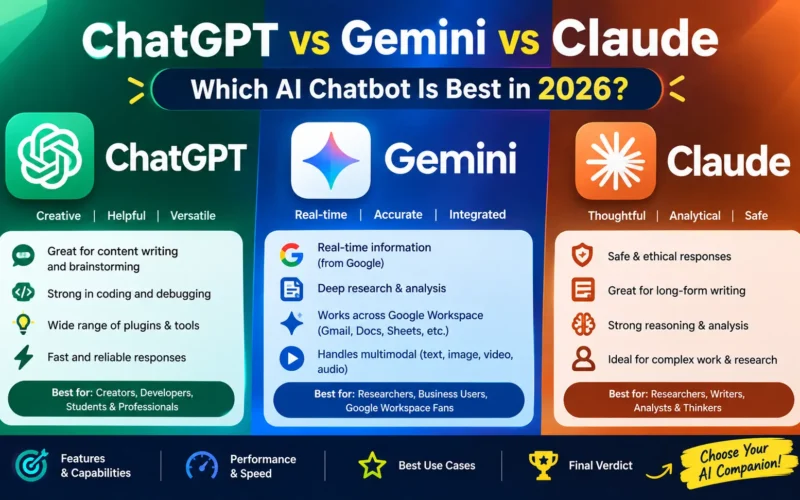
ChatGPT is one of the most versatile AI tools for online entrepreneurs and freelancers. It can help with brainstorming, writing, research assistance, coding, data analysis, business planning, and marketing.
You can use it to prepare article outlines, draft newsletters, create product descriptions, develop video scripts, and generate ideas for client projects.
How to make money with ChatGPT:
- Write and edit blog articles for businesses.
- Create website content and product descriptions.
- Offer email marketing and newsletter services.
- Develop social media calendars and captions.
- Prepare business documents, presentations, and research summaries.
- Assist with spreadsheet formulas and basic data analysis.
Example: Suppose a small business needs eight blog articles each month. You can use ChatGPT to brainstorm topics, develop outlines, and prepare initial drafts. After checking facts, improving originality, and editing the content, you can deliver polished articles to the client.
The income comes from providing valuable writing services, not simply generating AI text.
Best for: Beginners, bloggers, freelance writers, marketers, and business owners.
2. Claude — Best for Long-Form Writing and Research
Claude is an AI assistant that can support writing, document analysis, coding, brainstorming, and detailed editing.
It is useful for freelancers who work with long documents, detailed reports, ebooks, proposals, and structured content projects.
How to make money with Claude:
- Offer long-form blog writing and editing.
- Help businesses improve website copy.
- Prepare ebook drafts and educational resources.
- Summarize lengthy documents into readable reports.
- Assist with coding and documentation.
- Develop detailed content strategies for clients.
For example, you could help a business convert its existing training materials into a structured ebook. Claude can assist with organizing the information, while you check accuracy, improve clarity, and ensure the finished product meets the client’s needs.
Best for: Writers, editors, researchers, consultants, and developers.
3. Google Gemini — Best for Research and Productivity
Google Gemini can help users brainstorm, summarize information, draft content, and work with supported Google services and files.
For people who already use Google Workspace, it may fit naturally into a workflow involving documents, spreadsheets, email, and presentations.
How to make money with Google Gemini:
- Create research-based blog content.
- Prepare presentations for businesses.
- Develop marketing plans and campaign ideas.
- Assist with spreadsheet analysis.
- Organize information for virtual assistance services.
- Draft business emails and customer communication.
A virtual assistant, for instance, could use AI to prepare meeting summaries, organize research, and draft client emails. The assistant then checks the details and delivers a reliable result.
Best for: Virtual assistants, students, freelancers, and small businesses.
4. Canva AI — Best for Graphic Design and Digital Products
Canva is a popular design platform that provides templates and AI-assisted features for creating visual content. It is useful for people who want to produce professional-looking graphics without learning complicated design software first.
You can create social media posts, presentations, posters, thumbnails, ebooks, flyers, and marketing materials.
How to make money with Canva AI:
- Design social media posts for local businesses.
- Create YouTube thumbnails.
- Sell original templates and printable planners.
- Design ebooks and lead magnets.
- Prepare presentation slides for companies.
- Create branded graphics for online stores.
Example: A restaurant might need 20 social media posts every month. You can create a consistent visual style, prepare designs in Canva, and charge for a monthly content package.
To stand out, customize layouts, typography, colors, and messaging instead of delivering generic templates.
Best for: Graphic designers, content creators, social media managers, and digital product sellers.
5. Midjourney — Best for AI Image Creation
Midjourney is an AI image-generation tool used to create artistic visuals from text descriptions. It can help designers explore concepts and develop distinctive imagery for creative projects.
How to make money with Midjourney:
- Create custom illustrations for clients.
- Develop visual concepts for advertising campaigns.
- Produce artwork for eligible digital products.
- Create concept art for games and stories.
- Design original visuals for websites and social media.
- Develop visual assets for presentations and marketing materials.
For example, a children’s educational publisher may need a series of themed illustrations. You can use AI to explore visual concepts, refine the selected images, and deliver a consistent collection that meets the project’s specifications.
Always review the tool’s current commercial-use terms and any applicable licensing restrictions before selling generated assets.
Best for: Digital artists, illustrators, marketers, and creative entrepreneurs.
6. Adobe Firefly — Best for Commercial Creative Workflows
Adobe Firefly offers AI-assisted creative features for generating and editing images and other visual assets within Adobe’s creative ecosystem.
It can be helpful for professionals who want to combine AI assistance with more detailed design and editing workflows.
How to make money with Adobe Firefly:
- Produce advertising concepts.
- Create and edit marketing images.
- Develop product mockups.
- Prepare visual assets for online stores.
- Assist with promotional campaign design.
- Improve creative workflows for business clients.
For example, an ecommerce seller might need improved promotional images for a seasonal campaign. You can use AI-assisted editing to develop concepts and then carefully review the final assets for quality and accuracy.
Best for: Designers, marketing agencies, creative professionals, and ecommerce businesses.
7. Grammarly — Best for Editing and Professional Writing
Grammarly helps users improve grammar, clarity, tone, and readability. It is especially useful when delivering written content to clients who expect professional communication.
How to make money with Grammarly:
- Edit blog posts and website pages.
- Proofread business documents.
- Improve email campaigns.
- Refine resumes and cover letters.
- Edit reports and presentations.
- Offer proofreading services to students and professionals, within applicable academic integrity rules.
For example, you can offer proofreading packages for businesses that publish newsletters or articles regularly. Grammarly can identify potential problems, but a human editor should still check meaning, facts, context, and style.
Best for: Editors, writers, virtual assistants, and professionals.
8. Jasper — Best for Marketing Copywriting
Jasper is an AI platform focused on marketing content and brand-oriented writing workflows.
It can support businesses that need consistent messaging across advertisements, landing pages, product descriptions, and campaigns.
How to make money with Jasper:
- Write marketing copy for small businesses.
- Prepare product descriptions for online stores.
- Create advertising variations.
- Develop landing-page drafts.
- Assist with campaign messaging.
- Produce branded content for marketing teams.
For example, a marketing freelancer can prepare several headline and advertisement variations for a client to test. The freelancer’s value lies in understanding the audience, choosing the strongest message, and evaluating performance.
Best for: Copywriters, marketing agencies, and ecommerce businesses.
9. CapCut — Best for Short-Form Video Editing
CapCut offers video editing features that can help creators prepare content for platforms such as YouTube, Instagram, and TikTok, depending on regional availability and current product features.
Its editing tools can assist with captions, transitions, visual effects, and short-form content production.
How to make money with CapCut:
- Edit Instagram Reels for businesses.
- Create YouTube Shorts.
- Add subtitles to educational videos.
- Repurpose long videos into short clips.
- Produce promotional videos for local companies.
- Offer monthly video editing packages.
Example: A fitness coach records long educational videos but lacks time to create short clips. You can turn the recordings into several concise videos with captions and clear opening hooks, then charge for each video or a monthly package.
Best for: Video editors, social media managers, creators, and freelancers.
10. Descript — Best for Podcast and Video Repurposing
Descript is a content editing platform that supports workflows for audio, video, transcription, and spoken-word content.
It can make it easier to transform recordings into polished media and repurpose existing material.
How to make money with Descript:
- Edit podcasts.
- Clean up interview recordings.
- Create captions and transcripts.
- Turn webinars into shorter videos.
- Prepare promotional podcast clips.
- Produce educational video content.
For example, a consultant may record a 45-minute webinar and want several short videos for social media. You can use Descript to organize the recording, edit sections, and prepare clips for publication.
Best for: Podcasters, video editors, educators, and content agencies.
11. ElevenLabs — Best for AI Voice and Audio Projects
ElevenLabs provides AI-powered voice and audio tools, including text-to-speech and voice generation features.
These capabilities can support production workflows where natural-sounding narration is needed.
How to make money with ElevenLabs:
- Produce narration for educational videos.
- Create voiceovers for marketing content.
- Develop audio versions of written materials.
- Support multilingual content production.
- Create narration for presentations and explainers.
- Assist with audio production for digital learning resources.
For example, a training company may need narration for a collection of instructional videos. You can prepare scripts, generate suitable audio where permitted, check pronunciation, and deliver the finished recordings.
Use only voices and materials you have permission to use, and follow the platform’s rules for synthetic voices and identity-related content.
Best for: Video creators, educators, audio producers, and content agencies.
12. GitHub Copilot — Best for Coding and Software Freelancing
GitHub Copilot is an AI coding assistant that can help developers write code, understand existing projects, and improve development productivity.
It can support both experienced developers and learners who are building their programming skills.
How to make money with GitHub Copilot:
- Develop websites for small businesses.
- Create simple web applications.
- Fix bugs and improve existing code.
- Automate repetitive office tasks.
- Build internal business tools.
- Offer technical maintenance services.
For example, a local business might need a simple appointment booking website. A developer can use AI assistance while building the site, but must still test the application, protect customer information, and ensure that bookings work correctly.
AI-generated code should never be accepted without review and testing.
Best for: Web developers, programmers, software freelancers, and technical entrepreneurs.
13. Cursor — Best for AI-Assisted Development
Cursor is an AI-powered code editor designed to help developers understand, modify, and build software projects.
It can assist with navigating codebases, generating code, and implementing changes across multiple files.
How to make money with Cursor:
- Build business websites.
- Develop small software tools.
- Create website features for clients.
- Improve existing applications.
- Prototype digital products.
- Provide ongoing technical support.
A developer might create a reporting dashboard for a small company. Cursor can help accelerate coding, while the developer handles requirements, architecture, testing, security, and deployment.
Best for: Developers, technical freelancers, and software startups.
14. Zapier — Best for Business Automation
Zapier connects supported applications and automates workflows between them. Its automation capabilities can reduce repetitive tasks in sales, marketing, customer service, and administration.
How to make money with Zapier:
- Automate lead collection.
- Connect website forms to customer databases.
- Create appointment notification workflows.
- Automate routine reporting.
- Connect sales and marketing applications.
- Help businesses reduce manual data entry.
For example, when a customer submits an inquiry form, an automation could send a notification, add the lead to a spreadsheet or CRM, and trigger a follow-up task.
You can charge clients for workflow setup, documentation, testing, and ongoing maintenance.
Best for: Virtual assistants, operations consultants, agencies, and small businesses.
15. Surfer — Best for SEO Content Services
Surfer is an SEO content optimization platform that helps content creators evaluate and improve website content using search-related data and recommendations.
It can support bloggers, agencies, and businesses that want to improve their content strategy.
How to make money with Surfer:
- Offer SEO content optimization.
- Improve existing blog articles.
- Prepare content briefs for writers.
- Support keyword-focused content planning.
- Review page structure and topical coverage.
- Help businesses organize content improvement projects.
For example, a company may already have dozens of articles but struggle to attract relevant organic traffic. You can review the existing content, identify improvement opportunities, update useful information, and track performance over time.
Remember that SEO software cannot guarantee rankings. Search performance depends on content quality, search intent, competition, website health, and other factors.
Best for: Bloggers, SEO freelancers, content agencies, and website owners.
Comparison of the Best AI Tools to Make Money Online
| AI tool | Best use | Potential business model |
|---|---|---|
| ChatGPT | Writing and research | Freelance services |
| Claude | Long-form content | Editing and document services |
| Google Gemini | Productivity | Virtual assistance |
| Canva AI | Graphic design | Design services and templates |
| Midjourney | Image generation | Creative assets |
| Adobe Firefly | Visual editing | Marketing design |
| Grammarly | Proofreading | Editing services |
| Jasper | Marketing copy | Copywriting packages |
| CapCut | Short-form videos | Video editing |
| Descript | Audio and video | Podcast production |
| ElevenLabs | Voice generation | Narration services |
| GitHub Copilot | Coding | Software development |
| Cursor | App development | Web development |
| Zapier | Workflow automation | Automation consulting |
| Surfer | SEO optimization | SEO services |
The best tool depends on your business model. A freelance writer may need only one writing assistant and an editing tool, while a video editor may benefit more from video software and design applications.
7 Practical Ways to Make Money Online With AI in 2026
Choosing a tool is only the beginning. The next step is deciding what customers will pay you to do.
1. Start an AI-Assisted Freelance Writing Business
Content writing remains an accessible service for people who can research topics, organize information, and communicate clearly.
Businesses need website pages, blog articles, product descriptions, newsletters, and other written materials.
You can use ChatGPT or Claude to speed up brainstorming and drafting, Grammarly to support editing, and SEO tools to improve content structure.
How to get started:
- Choose a niche such as technology, education, finance, travel, or ecommerce.
- Create three strong writing samples.
- Develop a clear service package.
- Build a portfolio website or freelancer profile.
- Contact relevant businesses and apply for suitable projects.
- Deliver original, fact-checked content and request feedback.
For example, you could offer a package containing four researched blog posts per month. Define the word count, revision policy, research expectations, and delivery schedule before accepting the project.
2. Offer Social Media Management Services
Many small businesses struggle to publish consistent content across their social media accounts.
AI can help you develop content calendars, brainstorm post ideas, draft captions, and generate creative concepts. Canva can support the design process.
Possible services include:
- Monthly social media calendars.
- Branded graphics and carousel posts.
- Short-form video editing.
- Caption writing.
- Content scheduling.
- Monthly performance reports.
Start with a manageable package for one type of client, such as restaurants, coaches, tutors, or local retailers.
Do not promise viral growth or guaranteed follower numbers. Focus on consistent publishing, brand quality, and measurable business goals.
3. Create and Sell Digital Products
Digital products can include ebooks, planners, spreadsheets, templates, checklists, presentation designs, and educational resources.
AI can assist with planning, drafting, designing, and organizing these products.
Examples of products you could sell:
- Excel budget templates.
- Resume templates.
- Social media content planners.
- Business proposal templates.
- Study guides and revision planners.
- Original ebooks and niche-specific checklists.
- Notion templates and productivity systems.
For example, if you understand Excel, you could create a collection of spreadsheet templates for small businesses. AI can help draft instructions and formula explanations, while you verify the formulas and test the files.
Sell through an appropriate marketplace or your own website. Check marketplace policies, intellectual property requirements, and any rules concerning AI-generated content.
4. Start an AI-Assisted Blog and Affiliate Marketing Business
Affiliate marketing involves promoting relevant products or services through tracked links and earning a commission when qualifying actions occur.
AI can support keyword research, article outlines, product comparisons, email newsletters, and content updates.
A practical workflow is:
- Choose a focused topic.
- Research the questions your audience asks.
- Publish useful articles with original analysis.
- Join relevant affiliate programs.
- Include clearly disclosed affiliate links.
- Monitor traffic and conversions.
- Improve articles based on actual results.
For example, a website about Excel tutorials could publish guides on spreadsheet software, productivity applications, and relevant online courses.
A narrow, useful website can be easier to manage than a broad website covering unrelated subjects.
Affiliate marketing is not instant passive income. It requires traffic, audience trust, relevant recommendations, and ongoing maintenance. Do not fabricate product tests or claim personal experience you do not have.
5. Become an AI-Assisted Video Editor
Short videos are useful for creators, educators, consultants, and businesses that need regular online content.
You can use CapCut or Descript to help edit recordings, prepare captions, and repurpose long videos.
Start by creating a small portfolio with sample videos. Then approach creators, local companies, coaches, or podcasters who already publish content.
Possible packages include:
- Five short clips from one long video.
- Captioned videos for social platforms.
- Educational video editing.
- Podcast highlight clips.
- Promotional videos for businesses.
Charge based on the work involved, including editing complexity, revisions, turnaround time, and licensing requirements.
6. Build Websites and Offer AI Automation Services
If you have an interest in technology, you can use AI coding assistants to help create websites, landing pages, dashboards, and business workflows.
Small businesses may need better contact forms, appointment systems, reporting tools, or automated notifications.
You can combine website development with automation tools to deliver a more complete service.
For example, a tutoring business might need a landing page, an inquiry form, and an automated notification when a potential student submits a request.
You could offer setup, testing, documentation, and maintenance as a package.
Start with small, clearly defined projects. Protect customer data, use secure configurations, and test every important workflow before going live.
7. Offer Resume, Presentation, and Virtual Assistant Services
AI tools can help professionals and businesses prepare polished documents and manage routine administrative work.
Services may include resume editing, presentation design, meeting summaries, research organization, email drafting, and spreadsheet cleanup.
You can combine ChatGPT or Gemini with Canva and spreadsheet tools to provide a complete deliverable.
For instance, you might help a small company convert an unstructured collection of notes into a professional presentation. Your role is to organize the information, verify facts, improve the design, and make the presentation useful for its intended audience.
How to Choose the Right AI Business for Your Skills
Not every opportunity is suitable for every beginner. The best choice depends on what you enjoy doing, how much time you have, and whether you prefer client work or building your own business.
| Your current strength | Suggested opportunity | Tools to explore |
|---|---|---|
| Writing and communication | Blog writing and copywriting | ChatGPT, Claude, Grammarly |
| Visual creativity | Social media design | Canva, Adobe Firefly |
| Video editing | Reels and Shorts | CapCut, Descript |
| Programming | Websites and software | Cursor, GitHub Copilot |
| Organization | Virtual assistance | ChatGPT, Gemini |
| Marketing | SEO and affiliate content | ChatGPT, Surfer |
| Process improvement | Business automation | Zapier, ChatGPT |
| Teaching | Educational resources | ChatGPT, Canva |
You do not need to master all 15 tools. Start with one income opportunity and learn the smallest practical toolset required to deliver a good result.
A 30-Day Plan to Start Making Money With AI
If you are new to AI freelancing or online business, a simple 30-day plan can help you focus.
Week 1: Choose Your Service
Select one service based on your interests and existing skills.
Examples include blog writing, video editing, graphic design, or website development.
Study the basics of your chosen AI tool and identify the type of customer who might pay for your work.
Week 2: Create Your Portfolio
Prepare three to five high-quality samples that demonstrate what you can deliver.
If you want to become a writer, create original articles. If you want to edit videos, produce a few sample clips using material you have permission to use.
Show the problem your work solves, not just the AI tool you used.
Week 3: Find Potential Customers
Create a professional portfolio and establish a presence on relevant freelance marketplaces or professional networks.
You can explore platforms such as Upwork and Fiverr, or contact businesses directly with personalized proposals.
Avoid sending identical spam messages. Explain why your service is relevant to the particular customer.
Week 4: Pitch, Deliver, and Improve
Submit proposals, respond to inquiries, and aim to secure a small, well-defined project.
Deliver the work carefully, ask for constructive feedback, and improve your process based on the response.
Your first month may produce a client, useful portfolio material, or simply a better understanding of the market. Income is not guaranteed, and the time required to find customers varies.
How Much Money Can You Make With AI Tools?
There is no single reliable income figure for AI-based businesses. Earnings depend on your skill level, the value of your service, the number of customers, market demand, pricing, expenses, and how consistently you find work.
Here is a simple hypothetical example to illustrate the calculation.
Suppose you offer a social media design service and charge ₹5,000 per client per month.
- Two clients: ₹10,000 monthly revenue.
- Four clients: ₹20,000 monthly revenue.
- Six clients: ₹30,000 monthly revenue.
These figures are examples, not predictions or typical earnings. They represent gross revenue before software costs, taxes, payment fees, marketing expenses, and other business costs.
For a freelance service, calculate how many hours each client requires and whether the fee fairly compensates you for that work.
For a digital product business, remember that revenue depends on both the price and the number of successful sales, while platform fees, refunds, and advertising can reduce your profit.
The goal should be to build a sustainable business rather than chase unrealistic income promises.
Free AI Tools for Beginners
If you have a limited budget, begin with free tiers and existing software wherever possible. You can validate an idea before paying for multiple subscriptions.
Some useful starting points include:
- ChatGPT: Brainstorming, drafting, and general assistance.
- Google Gemini: Research assistance and productivity tasks.
- Canva: Basic graphic design and content creation.
- Grammarly: Writing and proofreading assistance.
- CapCut: Video editing, subject to available features.
- Google Docs and Sheets: Writing, organization, and spreadsheets.
- Zapier: Exploring automation with the available plan and limits.
Free plans may have usage limits, restricted features, or changing terms. Check current details on the official websites.
A sensible beginner strategy is to use free tools to produce portfolio samples, test your workflow, and learn what clients need. Upgrade only when a paid feature provides clear value.
Common Mistakes to Avoid When Making Money With AI
AI can make online work more efficient, but several mistakes can undermine your progress.
1. Expecting Instant Income
Downloading an AI tool does not create customers. You still need a marketable offer, a portfolio, and a way to reach potential clients.
2. Publishing Unedited AI Content
AI-generated content can contain inaccurate statements, repetitive writing, or unsupported claims. Always review the output before publishing or delivering it.
3. Trying Too Many Tools at Once
Subscribing to many applications can waste time and money. Learn one tool well enough to deliver a service before expanding your toolkit.
4. Ignoring Customer Needs
Clients generally pay for outcomes such as better content, a functional website, or a reliable workflow. They are less interested in the number of AI tools you use.
5. Copying Other People’s Work
Do not copy copyrighted content, designs, or products and attempt to sell them as your own. Check licensing terms and create work that offers original value.
6. Falling for Online Earning Scams
Be cautious of schemes promising guaranteed daily income, expensive courses claiming secret AI methods, or freelance jobs that require suspicious upfront fees.
7. Ignoring Privacy and Security
Do not upload confidential client information, personal records, or proprietary material to an AI service without appropriate authorization and a clear understanding of its data-handling terms.
Best Practices for Long-Term Success
To build a stronger online business with AI, focus on a few principles.
Choose a specific audience. Serving a clear customer group helps you understand its problems and create relevant services.
Develop real skills. Learn writing, design, coding, marketing, or another useful discipline alongside AI.
Build trust. Communicate clearly, meet deadlines, and deliver what you promise.
Measure results. Track project time, client feedback, conversions, and expenses to understand whether your business model works.
Keep learning. AI products change frequently, so review new features and adjust your workflow when there is a practical benefit.
Protect quality. Human judgment, fact-checking, and thoughtful customization help distinguish professional work from generic AI output.
Frequently Asked Questions (FAQs)
ChatGPT, Claude, Google Gemini, Canva, CapCut, Descript, ElevenLabs, Cursor, GitHub Copilot, Zapier, and Surfer are useful options for different online business models. The best choice depends on whether you want to write content, design graphics, edit videos, develop software, or automate workflows.
Yes. Beginners can use AI to support services such as writing, graphic design, video editing, and virtual assistance. However, learning the relevant skills, creating a portfolio, and finding paying customers still require effort.
You can start with free AI plans and free productivity tools. You may still need to invest time in learning, marketing, and customer acquisition. Some business models may eventually require paid subscriptions, hosting, or other expenses.
ChatGPT is a flexible starting point for many freelancers because it supports a wide range of tasks. Canva is useful for design, CapCut for video editing, and coding assistants such as Cursor can support development work.
You can explore freelance writing, social media management, proofreading, digital products, video editing, affiliate marketing, and virtual assistance. These opportunities usually require practical skills, but they do not necessarily require programming.
AI can assist with research and drafting, but the finished content should be accurate, useful, original in its presentation, and designed for readers. Follow the policies of your publishing platform and advertising or affiliate partners. Avoid mass-producing low-value pages simply to attract search traffic.
AI can help create digital products, support affiliate websites, or automate parts of a business. However, these models still require maintenance, marketing, customer support, and quality control. Income is not guaranteed to be passive or consistent.
For someone comfortable with writing, basic content services may be a straightforward starting point. People who enjoy visual work might prefer social media design, while those who enjoy editing could start with short-form videos. The easiest option depends on your existing abilities and access to potential customers.
No. Free tools may be enough to learn the basics and create an initial portfolio. Consider paid subscriptions only when their features, time savings, or quality improvements justify the expense.
There is no universal winner. A specialized freelance service can generate revenue through client projects, while a digital product business or niche website may offer opportunities to reach more customers over time. Choose a model you can operate consistently and improve based on real customer demand.
Conclusion
The best AI tools to make money online in 2026 can help you work faster, improve creative output, and develop valuable services for businesses and individuals. From ChatGPT and Claude to Canva, CapCut, Cursor, and Zapier, each tool offers different ways to support freelancing, content creation, digital products, and business automation.
However, the real opportunity is not simply using AI. It is using AI to solve a problem that customers care about.
Start with one skill, choose one suitable tool, build a small portfolio, and focus on delivering useful results. Learn from customer feedback, keep your costs under control, and improve your services over time.
Your best first step is simple: choose one AI-powered service, create three portfolio samples, and begin reaching out to potential customers. With patience, practical skills, and consistent effort, AI can become a valuable part of your online business strategy in 2026 and beyond.
3 comments